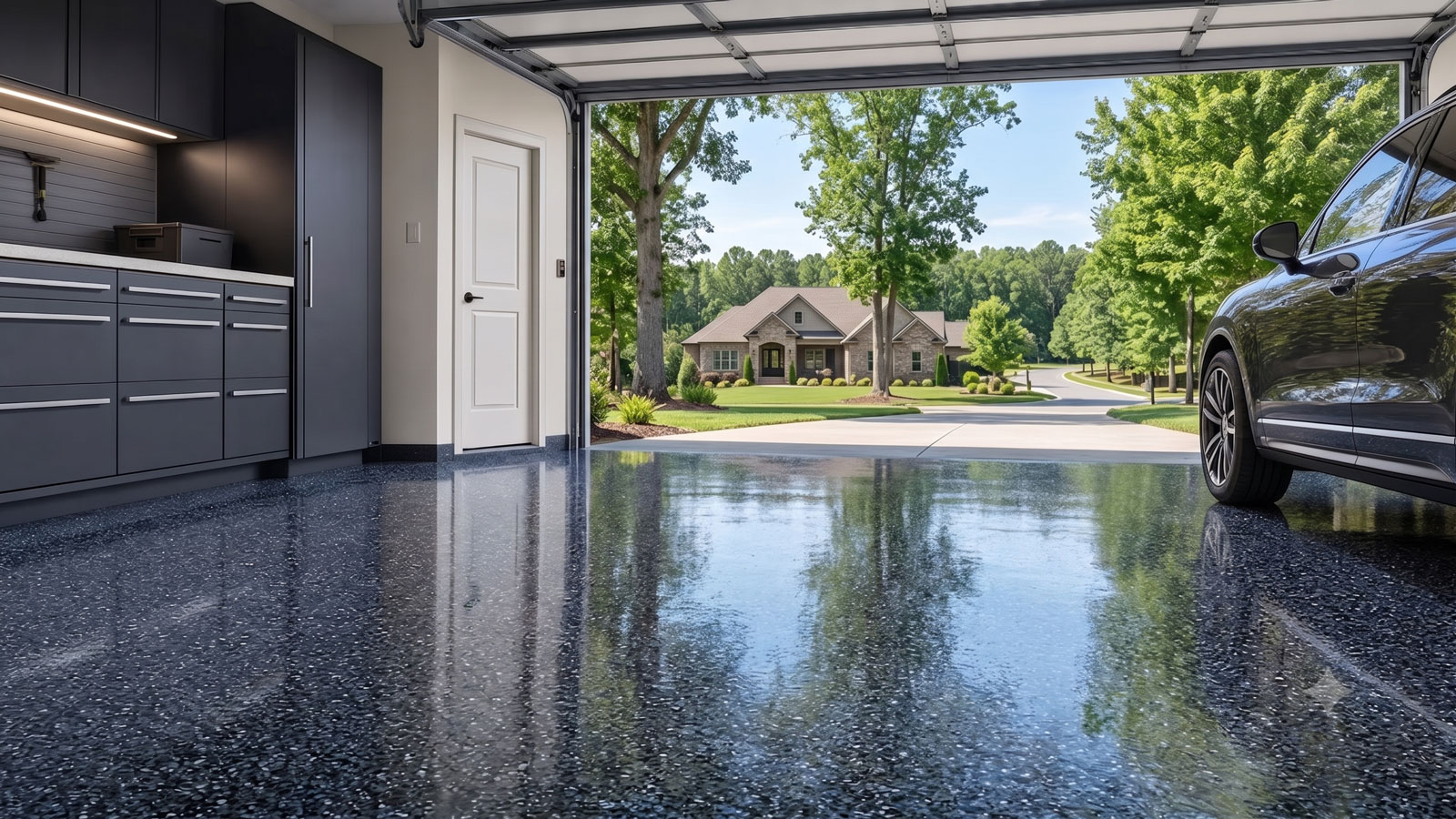
Garage Floor Coating in Richmond, VA
Floor Coating Services in Richmond, VA
Richmond garages span very different building eras, from older detached and alley-access structures near the historic core to attached garages in newer neighborhoods farther from downtown. That range matters because the concrete under an older garage can have repairs, coatings, contamination, or moisture history that is very different from a newer suburban slab. The age of the house and the age of the garage slab can differ by decades, especially where detached garages were rebuilt or expanded after the original home.
The James River, low-lying tributaries, steep neighborhood grades, and the city's extensive paved surface all make water movement a practical property issue in parts of Richmond. A garage that has seen runoff at the door, damp edges, or repeated wet-vehicle traffic should be evaluated for the source of that moisture before a coating is selected. That makes the threshold, driveway pitch, downspouts and any known high-water history more useful than a neighborhood label when deciding whether moisture-related work belongs in the scope.
For homeowners, the useful question is not simply epoxy versus polyaspartic. It is whether the slab is sound, dry enough for the proposed system, properly profiled, and matched to the way the garage is actually used—from daily parking to bikes, tools, storage, and workshop activity.
Local Market Insight
Richmond's mix of older urban garages, newer attached garages, river-and-stream drainage, and varied grades makes the existing slab history especially important. Moisture and old surface treatments deserve more attention than a one-size-fits-all coating recommendation.
What Affects the Cost of Garage Floor Coating in Richmond?
Richmond projects can differ sharply because older urban garages may need previous coatings, oil contamination, repairs or mixed pours removed, while newer suburban slabs can still carry curing compounds or sealers. James River and tributary drainage, tight access, edge work and garage use can add separate preparation and staging needs.
- Old paint or previous coatings: Older Richmond garages may have paint, sealer, patch material, or unknown prior coatings that require extra removal and profiling. The estimate should state exactly what removal or profiling is included before the new coating is applied.
- Cracks and patch history: A slab with years of settlement or repairs may need more crack treatment and patch preparation before coating. Check the actual property condition rather than assuming a neighborhood-wide moisture or drainage problem.
- Water entry and low spots: Garages affected by driveway runoff, poor drainage, or damp slab edges may need moisture investigation before installation. Mechanical preparation should reach sound concrete rather than simply roughen an incompatible surface layer.
- Tight urban access: Detached garages, narrow alleys, steps, and limited equipment access can increase setup and edge-work time. The repair plan should distinguish stable defects from joints or movement that may require different treatment.
- Garage use: Workshop use, frequent parking, storage systems, or bikes and equipment can influence traction, finish, and staging choices. Match texture and cleanability to how the garage is used, especially when wet shoes, tools or equipment are common.
- Threshold and edge repair: Older urban garages can have worn door edges, patched transitions, or localized spalling that adds detail work before coating. Include perimeter, threshold, steps and other detail work in the scope rather than relying only on open-floor square footage.
Call for a clear, project-specific estimate — or request one online.
Local Garage-Floor Conditions in Richmond
Before coating, separate ordinary wet-vehicle moisture from a recurring building-water problem. Rainwater carried in by tires is expected; water entering under the garage door, seeping through a wall edge, or appearing repeatedly through the slab is a different issue.
Older concrete can also carry invisible preparation challenges. Sealers, oil, curing products, paint, and patch compounds may not be obvious until the floor is cleaned and mechanically profiled. A coating is only as reliable as the surface it bonds to.
Richmond homeowners with a heavily used garage should also plan the project around access and staging. Cabinets, tools, freezers, lawn equipment, and cars all need somewhere to go while preparation, coating, and cure time are underway.
Older Core vs. Newer Richmond Garages
A detached garage behind an older city home often presents a different project than a newer two-car attached garage. The older floor may have more repairs, unknown surface treatments, and limited equipment access; the newer floor may be easier to reach but still needs inspection for curing compounds, cracking, or moisture.
That difference is useful when comparing estimates. A lower square-foot price on a straightforward newer slab may not translate to an older floor that needs stripping, patching, or extra edge work.
For homeowners comparing estimates, the useful distinction is between the age of the property and the age of the actual concrete. A later repour may be structurally sound but still have different joints or surface treatments from surrounding sections. The quote should identify those transitions, old coating edges and repair areas instead of assuming a historic address means one uniform slab.
James River, Steep Slopes, and Urban Runoff
Richmond's own flood guidance points to the James River, steep slopes and hills, extensive paved surfaces, and dense urban development as factors that can increase localized and overland flooding. The city also maintains a flood-protection system stretching more than three miles along low-lying river areas.
That does not mean a typical garage is flood-prone. It means homeowners should pay attention to the actual water path at the property: driveway pitch, low spots near the door, downspout discharge, damp wall edges, and whether water appears only after severe rain or as a recurring condition.
Richmond's flood-protection infrastructure and steep urban grades are valuable context because they explain why water behavior can vary block by block. But the coating decision should still follow direct evidence at the garage: recurring threshold entry, slow-drying edges, mineral deposits or prior finish failure. A dry garage remains primarily a surface-preparation project even in a city with major river infrastructure.
A final Richmond comparison point is access. Alley garages, detached structures and tight urban lots can require more equipment staging and perimeter work than a newer attached bay. That labor belongs in the estimate separately from coating choice.
Richmond Garage Floor Coating FAQs
Does Richmond's stormwater and floodplain context mean every garage has a moisture problem?
No. Flood and runoff risk varies by property. The practical step is to look for actual evidence at your garage—water at the door, damp edges, efflorescence, repeated ponding, or known drainage issues—before deciding what preparation is needed.
Are older Richmond garage floors harder to coat?
Not automatically, but older floors are more likely to have paint, sealer, repairs, oil exposure, or an unknown history. Those conditions can add preparation work.
What should I ask about an alley-access or detached garage?
Ask how the installer will handle equipment access, edge grinding, ventilation, material staging, and any existing coatings or repairs.
Is polyaspartic always the better choice for Richmond?
No. Polyaspartic offers fast cure and strong UV stability, while epoxy can be a good base or full system depending on the project. Surface condition and installation quality matter more than choosing a product name in isolation.
Does Richmond's floodwall protect every garage from stormwater?
No. The floodwall protects specific low-lying riverfront areas. Driveway runoff, blocked drainage, steep lots, and localized flooding can still affect individual properties elsewhere in the city.
Richmond Neighborhoods & Local Context
Phone Quote Line
Speak with a floor coating specialist about your project and get a realistic estimate range.
(804) 424-4555Typical Project Cost
$3,000–$5,500
Typical range for a two-car garage. Final pricing depends on floor size, concrete condition, prep work, coating type, and finish options.
Helpful Guides