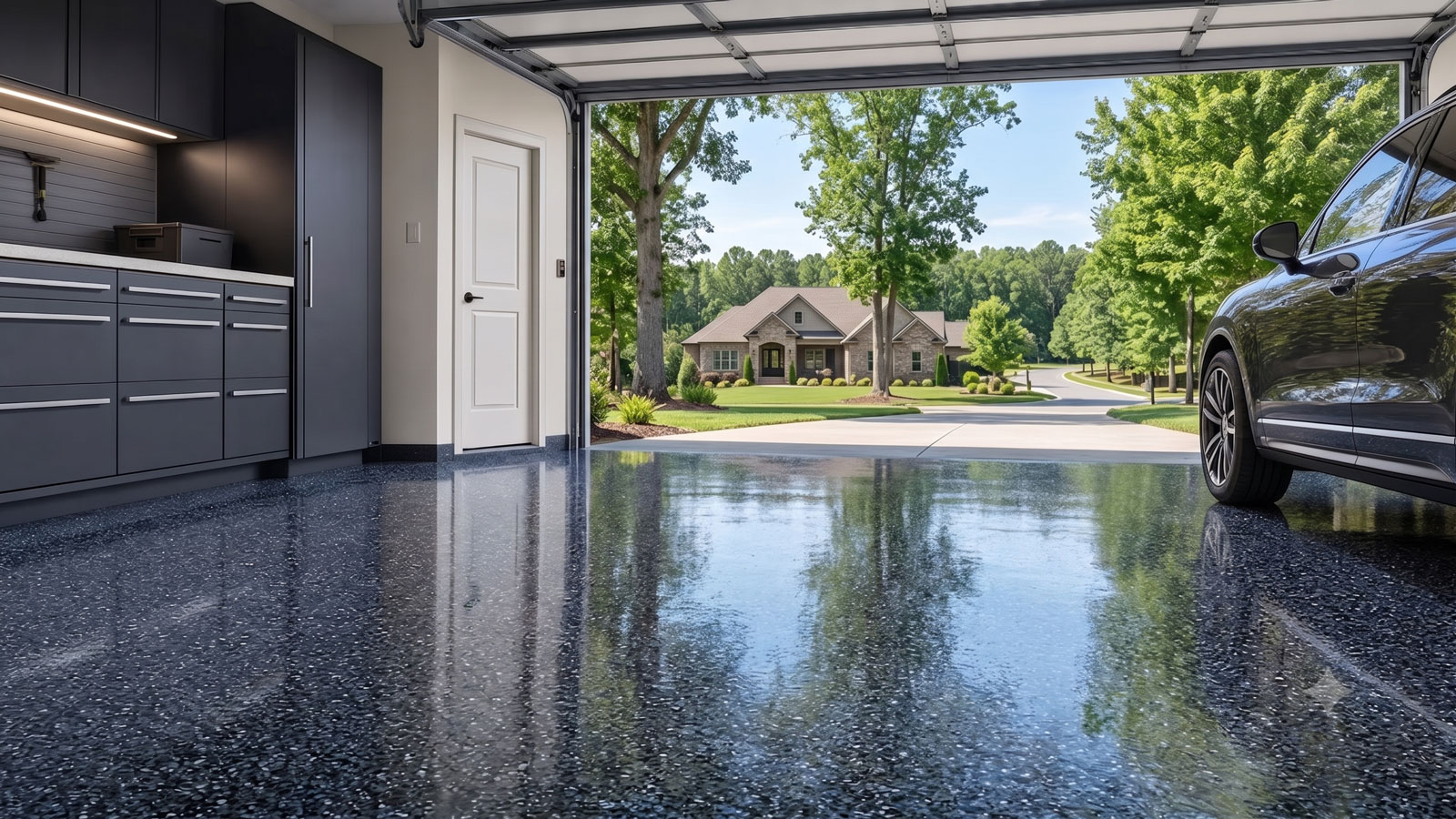
Garage Floor Coating in Short Pump, VA
Floor Coating Services in Short Pump, VA
Short Pump grew rapidly around the Broad Street and I-64 corridor, and much of its housing stock is newer than the older Richmond core. That often means attached two- and three-car garages, finished storage systems, and slabs that may look clean while still needing proper profiling before coating. That newer housing pattern does not make preparation optional: curing compounds, sealers, smooth machine finishes and builder repairs can all interfere with adhesion on a slab that appears nearly perfect.
Newer development also means active subdivision drainage, curb-and-gutter systems, sloped driveways, and large areas of pavement. If a particular garage sees stormwater at the threshold or persistent dampness, that site condition should be solved rather than covered. The same is true of drainage. Modern curb-and-gutter systems manage neighborhood runoff, but an individual driveway can still pitch toward the door or collect water at the apron.
Short Pump garages are frequently high-use spaces—daily parking, sports gear, strollers, bikes, storage, and household entry traffic. Durable cleanability and sensible traction are usually more useful than choosing a coating solely for maximum gloss.
Local Market Insight
Short Pump's newer housing and fast growth create a different project profile from older Richmond neighborhoods: younger slabs, larger attached garages, more built-in storage, and subdivision drainage conditions are common considerations.
What Affects the Cost of Garage Floor Coating in Short Pump?
Short Pump projects often begin with relatively young attached-garage concrete, so preparation frequently centers on curing products, sealers, smooth finishes, control joints and builder patches rather than decades of old paint. West Broad and I-64 growth-area drainage, multi-bay layouts, storage systems and quick vehicle return can add separate scope considerations.
- Two- and three-car layouts: Larger attached garages increase square footage and can add edges, steps, and transitions. The estimate should state exactly what removal or profiling is included before the new coating is applied.
- Built-in storage: Cabinets, wall systems, and garage refrigerators can require careful staging or extra edge work. Check the actual property condition rather than assuming a neighborhood-wide moisture or drainage problem.
- Young-slab preparation: A newer floor may still need mechanical profiling to remove curing residues and create a dependable bond. Mechanical preparation should reach sound concrete rather than simply roughen an incompatible surface layer.
- Subdivision drainage: Threshold water or repeated dampness should be understood before coating. The repair plan should distinguish stable defects from joints or movement that may require different treatment.
- Fast return to service: Busy households may value a faster-curing system when cars and daily storage need to return quickly. Match texture and cleanability to how the garage is used, especially when wet shoes, tools or equipment are common.
- Steps, stem walls, and transitions: Larger attached garages often include house-entry steps, stem walls, and multiple door transitions that add grinding and finishing detail. Include perimeter, threshold, steps and other detail work in the scope rather than relying only on open-floor square footage.
Call for a clear, project-specific estimate — or request one online.
Local Garage-Floor Conditions in Short Pump
A clean-looking newer slab is not automatically coating-ready. Surface hardness, curing products, construction dust, drywall residue, or light contamination can still interfere with adhesion.
Inspect the garage-door edge after heavy rain. Water patterns at the threshold can reveal a grading or drainage issue that deserves attention before installation.
Also plan around the contents of the garage. Short Pump households often have extensive shelving, sports equipment, bikes, and seasonal storage; moving those items can be as important to scheduling as the coating cure time.
Newer Construction Does Not Mean No Prep
The biggest mistake on a newer garage floor is assuming that because the concrete is visually clean, it can simply be coated. Mechanical profiling is still used to create the surface texture needed for a reliable bond.
For a newer Short Pump garage, the best quote should explain the preparation method just as clearly as it explains the finish color.
A clean-looking Short Pump floor can therefore be more preparation-intensive than a homeowner expects. The installer should explain how the surface will be mechanically profiled, what will happen at control joints and patched areas, and whether built-in storage or stem walls add detailed edge work. Those items are more informative than simply calling the slab new.
The West Broad / I-64 Growth Pattern
Short Pump is centered on the West Broad Street corridor and the I-64/Route 288 area, where Henrico has spent years planning around rapid growth, traffic, mixed-use development, and major interchange demands. That development pattern is very different from Richmond's older urban core.
For garage floors, newer construction often means larger attached bays and less legacy paint, but it can also mean hard-troweled concrete, curing compounds, fresh control joints, built-in storage, and households that need a quick return to vehicle use.
The West Broad/I-64 growth pattern also means many garages are part of large, busy households with substantial paved driveways and frequent vehicle turnover. A useful estimate should separate builder-treatment removal from site-drainage questions and from convenience issues such as cure time. That makes it easier to compare complete project scope rather than only the finish product.
Short Pump's larger attached garages also tend to include more joints, steps, stem walls and built-in storage than a simple rectangular slab. Those details add edge grinding and masking work even when the concrete itself is relatively young. The estimate should identify them separately from curing-product removal and drainage concerns.
Short Pump Garage Floor Coating FAQs
Can a nearly new Short Pump garage be coated right away?
It can often be coated once the concrete has cured sufficiently and moisture conditions are acceptable, but it still needs proper surface preparation.
Does a three-car garage cost exactly 50% more than a two-car garage?
Not necessarily. Square footage is important, but steps, edges, storage, repair needs, and prep complexity also affect the total.
What if my driveway slopes toward the garage?
Look for actual water intrusion during storms. If runoff reaches the door, drainage or threshold management should be considered before coating.
Is a fast-cure system useful in Short Pump?
It can be, especially for a busy household that needs the garage back quickly. Cure speed should still be weighed against slab condition, finish goals, and installer process.
Does a newer Short Pump subdivision guarantee a simple slab?
No. Newer concrete may have fewer years of damage, but curing products, smooth finishes, shrinkage cracks, control joints, and construction contamination can still affect preparation.
Short Pump Neighborhoods & Local Context
Phone Quote Line
Speak with a floor coating specialist about your project and get a realistic estimate range.
(804) 424-4555Typical Project Cost
$3,000–$5,500
Typical range for a two-car garage. Final pricing depends on floor size, concrete condition, prep work, coating type, and finish options.
Helpful Guides
Other Service Areas